
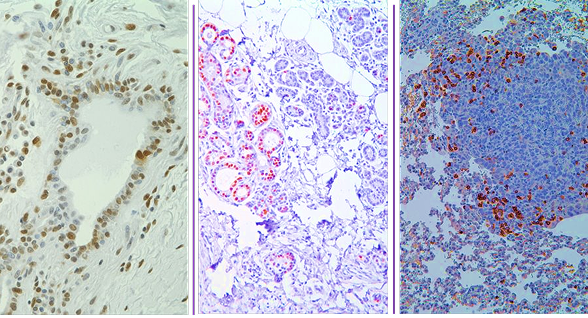
Biomarkers have become increasingly important in early drug discovery because they help researchers evaluate biological activity and therapeutic response with greater precision. Across areas such as oncology, immunology, neuroscience, and cell therapy research, biomarker analysis is routinely used to support target validation, characterize tissue response, and guide translational decision-making.
As biomarker-driven research expands, generating accurate and reproducible biomarker data becomes increasingly important because interpretation depends on more than detecting a signal alone. Factors such as biomarker selection, assay optimization, staining strategy, tissue preparation, and analytical consistency can all influence how biomarkers are detected and interpreted. Variability in these areas may contribute to false-positive or false-negative results, potentially affecting biological interpretation, therapeutic evaluation, and downstream drug discovery decisions.
When biomarker strategies are properly optimized, they can provide deeper insight into disease biology, therapeutic activity, and cellular response — helping researchers make more informed drug discovery decisions earlier in development.
What makes a biomarker strategy effective in early drug discovery?
Developing a Biomarker Strategy for Early Discovery
Selecting the right biomarker strategy early in discovery can significantly influence how therapeutic activity is evaluated and interpreted throughout a study. As therapeutic development becomes increasingly precision-driven, researchers are placing greater emphasis on biomarkers that can provide meaningful insight into mechanism of action, tissue response, therapeutic activity, and treatment evaluation early in the research process.
Biomarker strategies are also becoming more integrated, combining multiple markers and complementary analytical methods to better evaluate complex biological systems and support more informed drug discovery decisions. This shift is particularly important in biologically heterogeneous tissue environments, where therapeutic response may be influenced by multiple signaling pathways, cellular populations, and microenvironment interactions simultaneously.
As a result, researchers are increasingly incorporating broader biomarker panels and multiparameter approaches capable of generating a more comprehensive understanding of disease biology and therapeutic activity. These approaches are often strengthened through quantitative and multiplex biomarker analysis, which can provide additional insight into biomarker co-expression, tissue heterogeneity, and therapeutic response while preserving spatial context.¹
Quantitative Analysis and Biomarker Interpretation
As biomarker use continues to expand across drug discovery and translational research, analytical specificity, reproducibility, and standardized workflows are becoming increasingly important for generating reliable and biologically meaningful data. Biomarkers are playing a growing role in helping researchers identify disease mechanisms, evaluate therapeutic activity, and improve the accuracy of clinical evaluation throughout development. At the same time, variability in sample preparation, staining quality, assay optimization, and biomarker interpretation can all influence how biomarkers are detected and quantified across studies, potentially affecting downstream biological and therapeutic evaluation.²
Not all biomarkers provide the same level of specificity, sensitivity, or biological relevance. Some biomarkers may demonstrate strong associations with disease biology but also limit reproducibility across tissue types or experimental conditions. Disease heterogeneity, genetic diversity, environmental influences, and variability across patient populations can also further complicate biomarker performance and interpretation, reinforcing the need for rigorous validation and standardized analytical approaches.
These challenges are particularly evident in complex diseases such as brain cancer, where tumor heterogeneity can significantly affect biomarker expression and therapeutic response. Recent reviews examining brain cancer biomarkers have emphasized that molecular heterogeneity continues to complicate biomarker standardization, interpretation, and clinical application across patient populations and disease subtypes.³
As a result, quantitative analysis and biomarker interpretation require more than identifying a detectable target alone. Researchers must also determine whether biomarkers can be reproducibly stained, quantitatively analyzed, and consistently interpreted within the broader biological context of the study. When biomarker selection, analytical strategy, and quantitative analysis are aligned early, researchers are better positioned to generate consistent and biologically meaningful data throughout development.
Early Biomarker Validation and Drug Discovery Evaluation
Early biomarker validation helps researchers determine whether therapeutic strategies are generating meaningful biological responses before larger downstream investments are made. Reliable biomarker analysis can support target validation, strengthen confidence in biological findings, improve study interpretation, and help identify weak or inconsistent signals earlier in the research process.
Integrating biomarker strategy early in development also provides researchers with analytical insight that can support efficacy evaluation, mechanism of action studies, patient stratification, and therapeutic optimization throughout drug discovery. When biomarker analysis is carefully aligned with study objectives and biological context, researchers are better positioned to improve disease understanding, evaluate therapeutic relevance more effectively, and generate more informed translational and drug discovery insight.⁴
As biomarker-driven drug discovery continues to evolve, generating reproducible and biologically meaningful data early in development remains essential for strengthening therapeutic evaluation and supporting translational research.
Supporting Biomarker Strategies for Drug Discovery
HistoSpring’s experienced PhD-level scientific team works closely with researchers to help evaluate biomarker strategies, optimize analytical approaches, and support more informed therapeutic development decisions.
Through custom histology, immunostaining, multiplex biomarker analysis, and quantitative pathology services, we help researchers generate reproducible and biologically meaningful data to support drug discovery and translational research.
Contact us to discuss your next research project.
413-794-0523 | info@histospring.com
References
- Passaro A, Bakir M, Hamilton E, et al. Cancer Biomarkers – Emerging Trends and Clinical Implications for Personalized Treatment. Cell. 2024;187(7):1617-1635. Published March 28, 2024. https://www.sciencedirect.com/science/article/pii/S0092867424002447
- AlDoughaim M, AlSuhebany N, AlZahrani M, et al. Cancer Biomarkers and Precision Oncology: A Review of Recent Trends and Innovations. Clinical Medicine Insights: Oncology. 2024;18:11795549241298541. Published online November 17, 2024. doi:10.1177/11795549241298541
- Saini N, Tiwari AK, Leahy R, et al. Transforming Brain Cancer Biomarker Research with Patinformatics and SWOT Analysis. Drug Discovery Today. 2025;30(3):104314. doi:10.1016/j.drudis.2025.104314
- Gromova M, Vaggelas A, Dallmann G, et al. Biomarkers: Opportunities and Challenges for Drug Development in the Current Regulatory Landscape. Biomarker Insights. 2020;15:1177271920974652. doi:10.1177/1177271920974652
#DrugDiscovery #Biomarkers #TranslationalResearch #Histology