
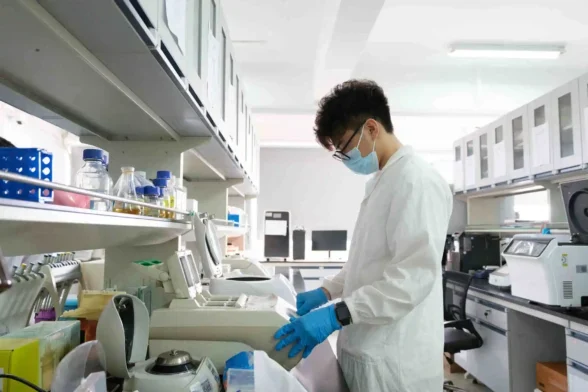
Modern translational research helps move scientific discoveries toward practical clinical application by supporting the development of therapies, diagnostics, and other technologies designed to improve human health. As programs advance toward therapeutic development and commercialization, researchers increasingly rely on biomarkers, assay development, and molecular characterization to support scientific evaluation and translational decision-making.¹
These multidisciplinary research activities often span tissue culture, human-derived materials, molecular biology, immunology, imaging, and biomarker research. They also frequently involve collaboration among academic laboratories, CROs, biotech startups, and therapeutic development teams. Supporting these evolving research efforts requires more than laboratory space alone. It requires modern, research-ready BSL-2 laboratories that combine robust infrastructure, integrated scientific environments, and the flexibility to support research as programs evolve.
Research-Ready Infrastructure
Compliant laboratory space, biosafety oversight, established procedures, equipment access, and facility support help reduce the day-to-day operational burden that can slow research activity. Together, these elements provide the operational foundation needed to support modern translational research.
The importance of research-ready infrastructure is supported by a recent study on clinical and translational research capacity, which found that successful research programs depend on more than scientific discovery alone. They also depend on strong infrastructure, adequate funding, a skilled workforce, institutional support, collaboration, and access to shared resources.²
For startups, early-stage biotech companies, and research teams operating under tight timelines, research-ready infrastructure provides the foundation needed to launch projects more efficiently, reduce operational complexity, and focus resources on scientific execution and analysis.
Integrated Laboratory Environments
Integrated laboratory environments help connect multiple scientific disciplines and stages of analysis within a coordinated research setting. Rather than operating as isolated activities, workflows involving tissue processing, molecular biology, biomarker analysis, imaging, and digital pathology benefit from access to shared scientific resources and expertise.
Integrated laboratory environments improve continuity between sample preparation, biological assays, imaging, data analysis, and downstream interpretation while providing access to shared scientific services, specialized expertise, and multidisciplinary collaboration. This integrated approach can be especially valuable for organizations managing translational programs that depend on cross-functional scientific resources and collaborative research activities.
Access to compliant BSL-2 laboratory space combined with integrated scientific resources and support services can help translational programs move more efficiently from early discovery into applied research and development.
Scalable Research Growth
As research programs evolve, laboratory environments must be able to adapt to changing technologies, collaborative research models, funding opportunities, and shifting project priorities. Flexible BSL-2 laboratory environments help organizations expand research capabilities without the time, cost, and operational complexity of building or managing independent laboratory facilities.
This flexibility enables research teams to adapt as scientific needs change while maintaining project momentum and supporting continued research growth.
The Growing Role of BSL-2 Labs in Translational Research
As translational research continues to evolve, research-ready BSL-2 laboratory environments are playing an increasingly important role in supporting modern life science innovation. By combining research-ready infrastructure, integrated laboratory environments, and the flexibility to adapt as research programs grow, these laboratories help organizations move more efficiently from early discovery into therapeutic development.
HistoSpring supports emerging biotech companies, academic collaborations, and evolving life science programs with research-ready BSL-2 laboratory environments, scientific resources, and facility support that help keep research moving forward.
Contact HistoSpring to learn more about available wet lab and BSL-2 laboratory resources, info@histospring.com.
References
- Leica Biosystems. What Is Translational Research? Leica Biosystems Educational Resources. https://www.leicabiosystems.com/us/educational-resources/articles/what-is-translational-research/
- Ogunsanya M, Beebe L, Campbell J, et al. Exploring barriers, needs, and facilitators for clinical and translational research in Oklahoma: A sequential mixed-methods study. Journal of Clinical and Translational Science. 2025;9(1):e155. https://pmc.ncbi.nlm.nih.gov/articles/PMC12392360/