
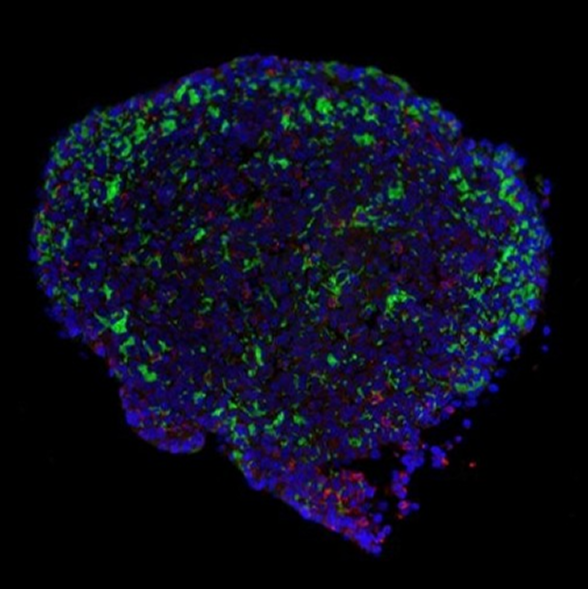
Three-dimensional cancer models are providing researchers with increasingly sophisticated ways to study tumor biology, disease progression, and therapeutic response. Organoids, spheroids, and explant cultures each offer distinct advantages, from scalable therapeutic testing to investigating complex interactions within the tumor microenvironment. Understanding these differences can help researchers select the model best suited to their study objectives and help generate higher-quality data.
Organoids and Spheroids: Distinct Models, Different Advantages
Organoids and spheroids are 3D in vitro models that have expanded the ways researchers investigate cancer biology, where each brings different strengths to a study. How they are generated, the biological characteristics they reproduce, and how they can be used can help researchers determine which approach is the right fit.
Organoids are grown from stem cells or primary tissue and can mimic key structural, functional, and biological characteristics of the tissue from which they originated. In cancer research, patient-derived organoids (PDOs) take this approach a step further. Generated from an individual patient’s tumor tissue, these 3D lab-grown models can retain important characteristics of the original tumor, including aspects of its biology, architecture, and genetics. This makes PDOs valuable for investigating patient-specific tumor biology and therapeutic response.
Spheroids take a more streamlined approach. These multicellular aggregates can be generated from a single cell type or a combination of cell types, including cancer cell lines and primary or patient-derived cells. By recreating cell-to-cell interactions and features of the tumor microenvironment, spheroids provide a scalable model for studying tumor behavior, drug response, cytotoxicity, and therapeutic efficacy.
Explant Cultures: A Deeper Level of Biological Context
Explant cultures maintain intact pieces of tissue ex vivo, preserving native architecture and multiple cell populations. This allows researchers to study biological responses while maintaining the cellular interactions found within the tissue.
Patient-derived explants (PDEs), a type of explant culture, use fresh patient tissue to study normal or cancer responses within a more intact tissue environment. By maintaining tumor, immune, and stromal components within the same tissue, researchers can evaluate therapeutic response and other biological activity while capturing individual differences that may influence those responses.
The value of studying this individual variation was demonstrated in a study of human breast explants from 23 donors examining differences in estrogen response.¹ Researchers found substantial differences in how tissue from individual donors responded to estrogen, and estrogen receptor expression alone did not explain those differences. By comparing responses across patient-derived tissue, the study demonstrated how PDEs can help researchers investigate biological variation from one individual to another.
Broader research was demonstrated in a separate study exploring macrophage polarization and exposure to xenoestrogens, chemical compounds that can mimic natural estrogen and disrupt normal hormone signaling.² Researchers found changes associated with macrophage polarization as well as epithelial responses within the breast tissue, demonstrating how PDEs can help examine biological effects across multiple cell populations rather than within a single cell type.
Together, these studies illustrate the research advantages of using PDEs to investigate cancer biology and therapeutic response.
Defining the Right Fit
What ultimately determines which 3D cancer model is the right fit? The answer depends on the biological characteristics the research needs to capture and how the model will be used.
- Organoids offer a reproducible, scalable approach for studying tumor cell behavior and comparing therapeutic response across experimental conditions.
- Spheroids provide greater tissue-specific complexity, helping researchers investigate disease mechanisms, patient-specific tumor characteristics, and therapeutic response.
- Explant cultures preserve a more intact tissue environment, allowing researchers to study patient variability and tumor, immune, and stromal interactions within their broader biological context.
As research evolves, collaboration can help scientific teams identify the appropriate model and analytical approach to gain deeper insight into tumor biology, evaluate biological response, and advance cancer research.
HistoSpring brings these capabilities together through patient-derived cancer models, explant cultures, histology, biomarker analysis, and advanced tissue analysis. Contact our scientific team to discuss the right model and analytical approach for your next research project, info@histospring.com | 413-794-0523.
References
- Dunphy KA, Black A, Roberts AL, et al. Inter-individual variation in response to estrogen in human breast explants. Journal of Mammary Gland Biology and Neoplasia. 2020;25(1):51–68. https://pmc.ncbi.nlm.nih.gov/articles/PMC7147970/
- Gregory KJ, Morin SM, Kubosiak A, et al. The use of patient-derived breast tissue explants to study macrophage polarization and the effects of environmental chemical exposure. Immunology & Cell Biology. 2020;98(10):883–896. doi:10.1111/imcb.12381
#3DCellCulture #CancerModels #TranslationalResearch #DrugDiscovery